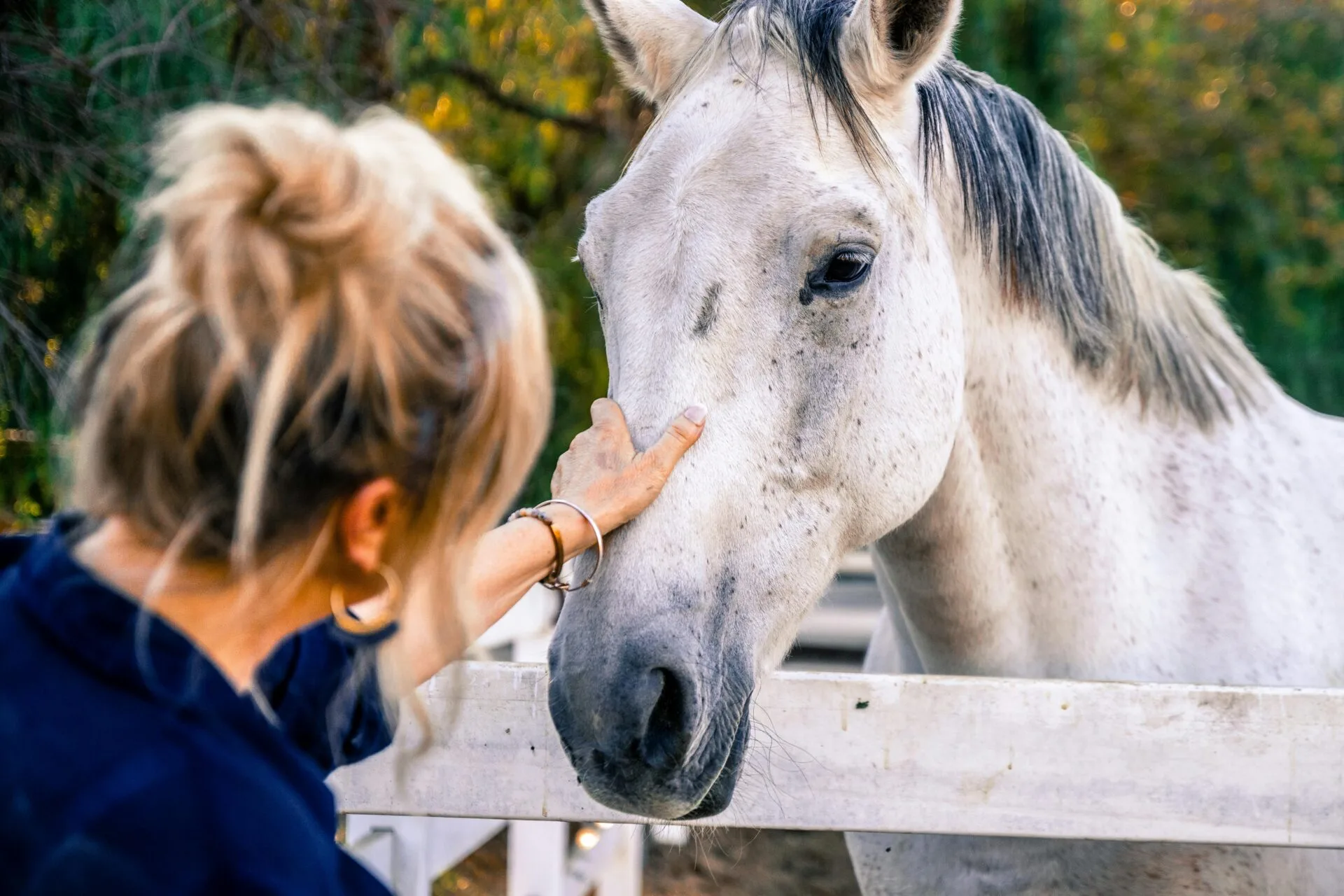
When people think of horses, a few things might come to mind, such as their strength, their presence, and their quiet steadiness. But for many, horses offer something more. They provide a pathway to connection, awareness, and healing.
As an equestrian of over two decades, I have come to see that the bond between horse and rider goes far beyond performance; it becomes a powerful mirror for communication, patience, and self-awareness.
Riding also offers something increasingly rare, a break from constant digital noise. In the saddle, distractions fade. What replaces them is a focused, almost meditative state that brings you fully into the present moment.
I experience this most clearly with my horse, Captain Sully. Our communication does not rely on force or complicated tools. It happens through subtle cues, such as a shift in posture, a gentle press of the leg, or a simple voice command.
Over time, riders begin to see just how sensitive and responsive horses are, and how deeply they attune to human intention.
Equine therapy, also known as equine-assisted therapy, builds on this natural connection. It has become a recognized and effective approach for individuals with intellectual and neuropsychological conditions, particularly those on the autism spectrum.
Horses respond authentically and without judgment. That alone can be powerful. It creates a safe space where individuals can explore emotions, build confidence, and develop nonverbal communication skills in a way that feels natural rather than forced.
The work of Temple Grandin, especially in The Autistic Brain, helps deepen our understanding of this connection. She describes how many individuals on the autism spectrum experience the world in highly visual and sensory ways. This aligns closely with how animals, including horses, interact with their environment. Her perspective highlights why these interactions can feel so intuitive and meaningful.
Some people describe the bond between horse and human as “telepathic.” A more grounded way to understand it is as a highly refined form of communication, one rooted in awareness, patience, and mutual respect.
Horses are incredibly perceptive. They pick up on body language, emotional shifts, and even subtle changes in energy. They respond to not only what we do, but to how we feel. This challenges us to become more present, more regulated, and more intentional in our actions.
Ultimately, equine therapy is not just about working with horses. It is about reconnecting with ourselves and with others. It invites us to slow down, listen more closely, and show up more authentically.
In a world filled with constant noise and distraction, that kind of connection is more valuable than ever.
Sometimes, meaningful communication does not require words. It simply begins with presence.
Dr. Erica Vieira is post-doctoral fellow at the Morris Psychological Group.